Carla Tolomeo was born in 1941 in Pinerolo (Torino), but grew up and studied in Rome where she began her career as a painter, encouraged by Giorgio de Chirico and later by Guttuso, Gentilini and Attardi. In 1971 she exhibited her artworks in Lugano, as she discovered Japanese painting being the primary source of her inspiration.
The illustrious and highly cultured Giovanni Testori later introduced her to the Cavour Gallery in Milan, where she organized the exhibition, Le storie di Erodiade (The Stories of Herodias).
Thus, it was Milan where Carla began a new fervid artistic period gathering the fruits of her studies on works by renowned classic masters – Vittore Carpaccio, Albrecht Dürer and Leonardo.
Between 1976 and 1980 she created designs and oils as well as etchings that she exhibited in Europe – Vienna, Geneva, Zurich and Athens. For the biography of Giacomo Casanova, she dedicated designs and engravings accompanied with a text by Leonardo Sciascia.
Following a period of time spent in Paraguay, the artist found herself once again based in Milan where in addition to her creative work she also taught etching at the the Academy in Brera as well as in Venice. In 1995, the artist exhibited a series of Variazioni (Variations) from works by Mantegna in Mantua.
In 1997, she was invited to The Leicester Galleries in London with an important exhibition Omaggio a Leonardo (A Tribute to Leonardo) and in 1999 her works were shown at the Museum of Contemporary Art in Rijeka; later she was invited to Zagreb as a guest at the Italian Institute of Culture.
In 1997 she began showing her Sedie (Chairs) which would mark a turning point in her artistic process.
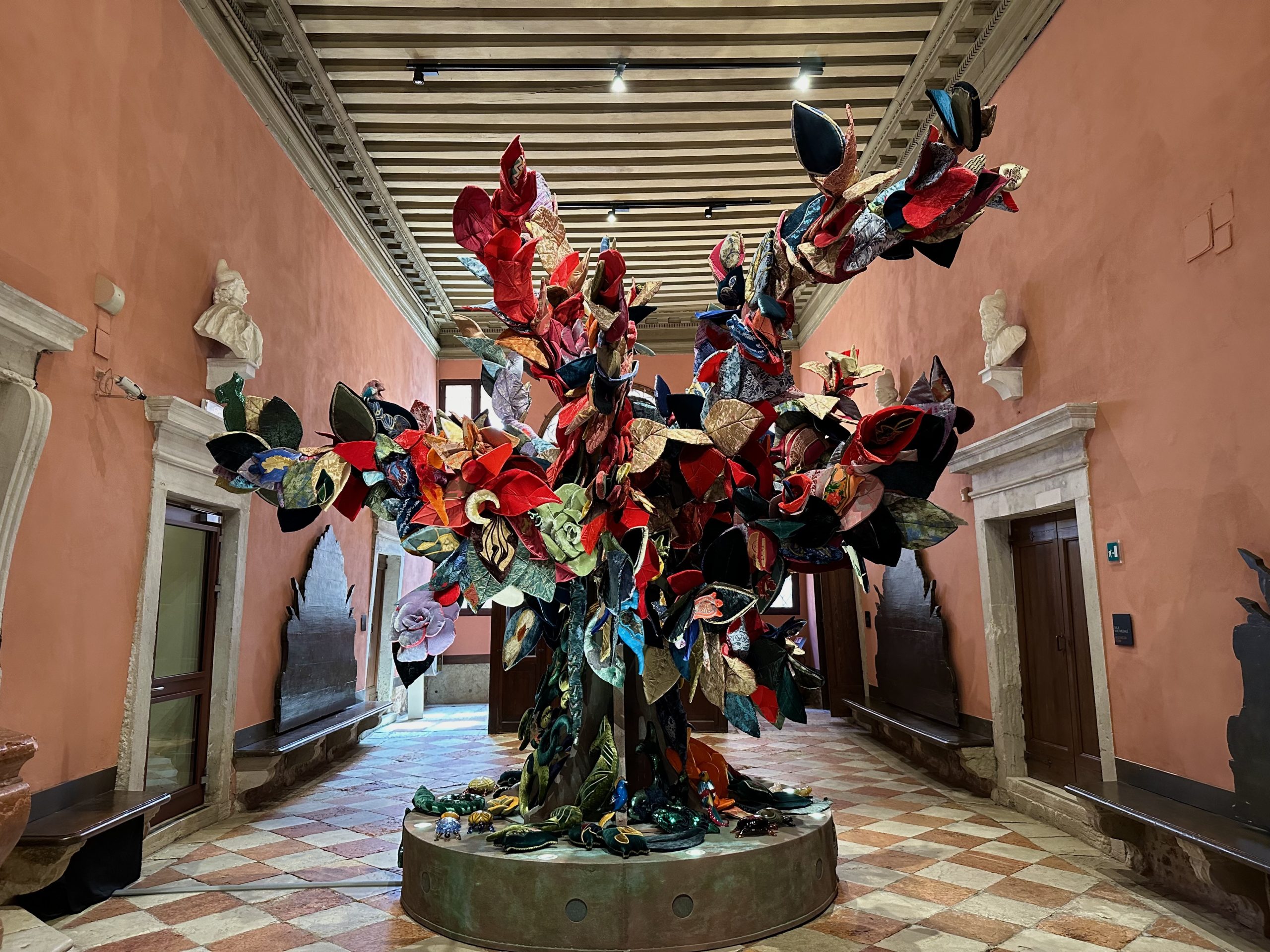
With these creations – a pretext for refined pleasure that has been well-received worldwide – Tolomeo greatly surprised her collectors. As she herself wrote in the presentation of her first catalogue dedicated to the Chairs-Sculptures, her artistic philosophy consists in a mutation-transformation of the chair from an ordinary object to an artistic object, precisely beginning with one of the simplest domestic pieces of décor.
Strengthened by her past experiences, her studies, the wealth of knowledge acquired through her research on Borges, her capability, her studies on Japanese painting and the teachings of her former master Giorgio de Chirico, Carla Tolomeo was able to transform the chairs into totems, wriggling fish, a flower of gigantic proportions, etcetera.
Her Chairs-Sculptures have become something magical eventually – almost a rediscovered infancy – with that twist of mischievousness from someone who has lived life intensely.