Building and history
Palazzo Mocenigo is a large building of gothic origin extensively rebuilt at the beginning of the 17th century, when it attained its present appearance. From 17th century, the palazzo was the residence of the San Stae branch of the Mocenigo family, one of the most important families of the Venetian patriciate, seven members of which became doges between 1414 and 1778.
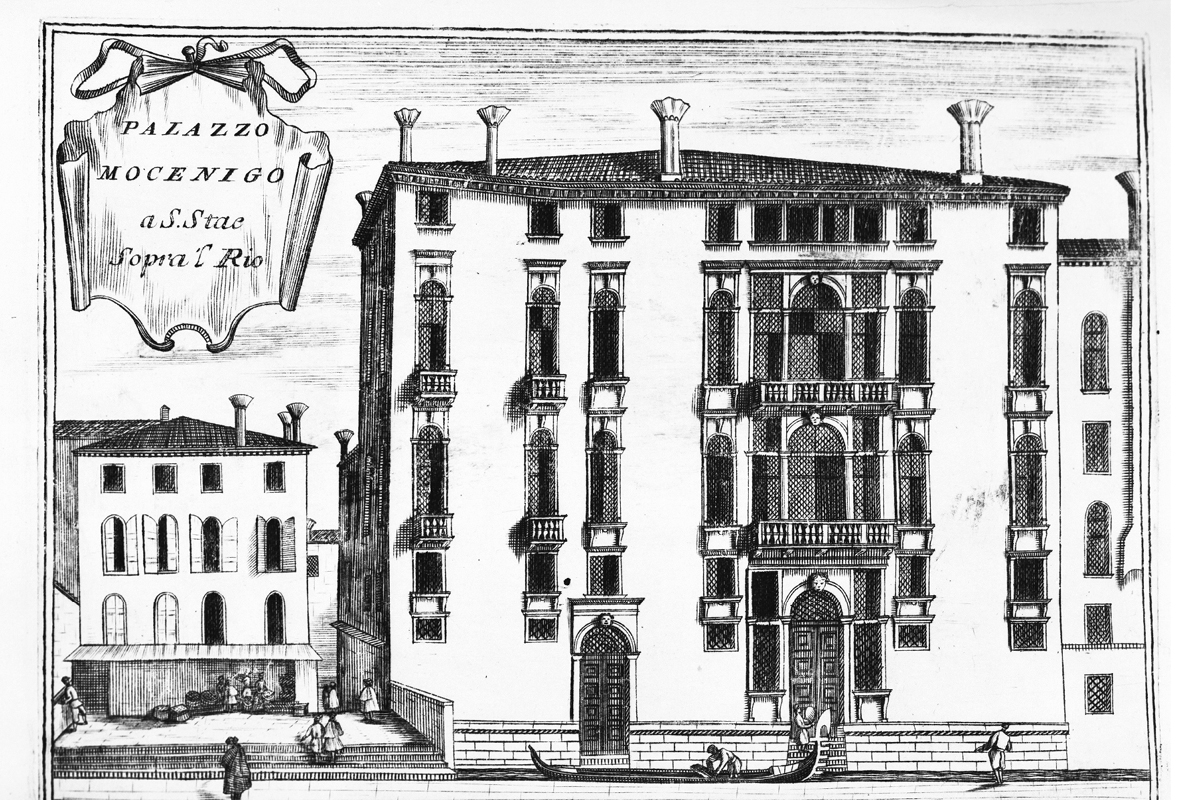
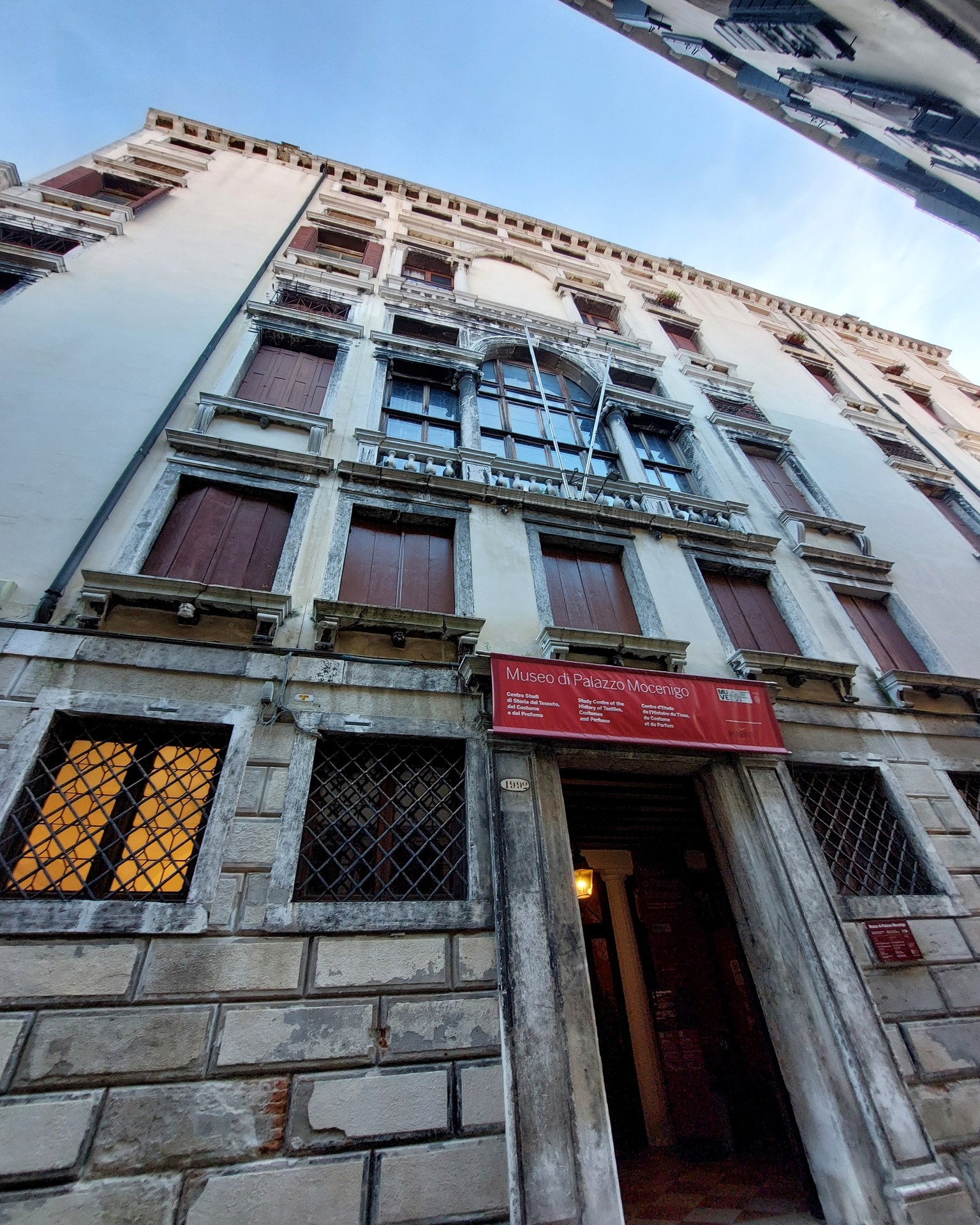
The external façades looking on to the street (salizàda) and San Stae canal are characterised by their large Serlian windows, a common feature in Venetian architecture during the 17th and 18th centuries; these are three-light windows with a central opening and a semi-circular arch above and two lower windows at the sides with entablature that also make it possible to alternate the piano nobile with mezzanines.
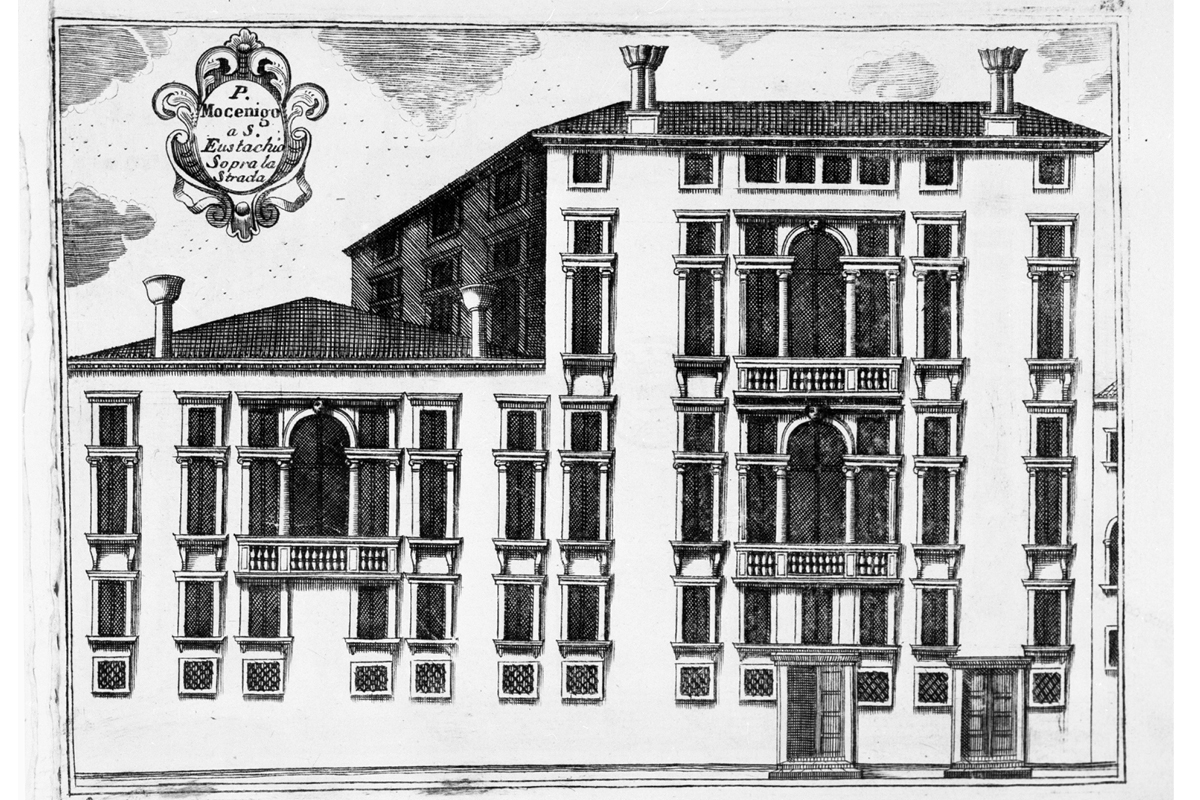
The street façade, today the entrance to the palazzo, highlights its extension on the left side, which was the result of the acquisition of adjacent buildings. With a large central hall (pòrtego) that was used for official functions and goes right through the building, flanked by the other rooms, its interior is typical of all Venetian patrician homes.
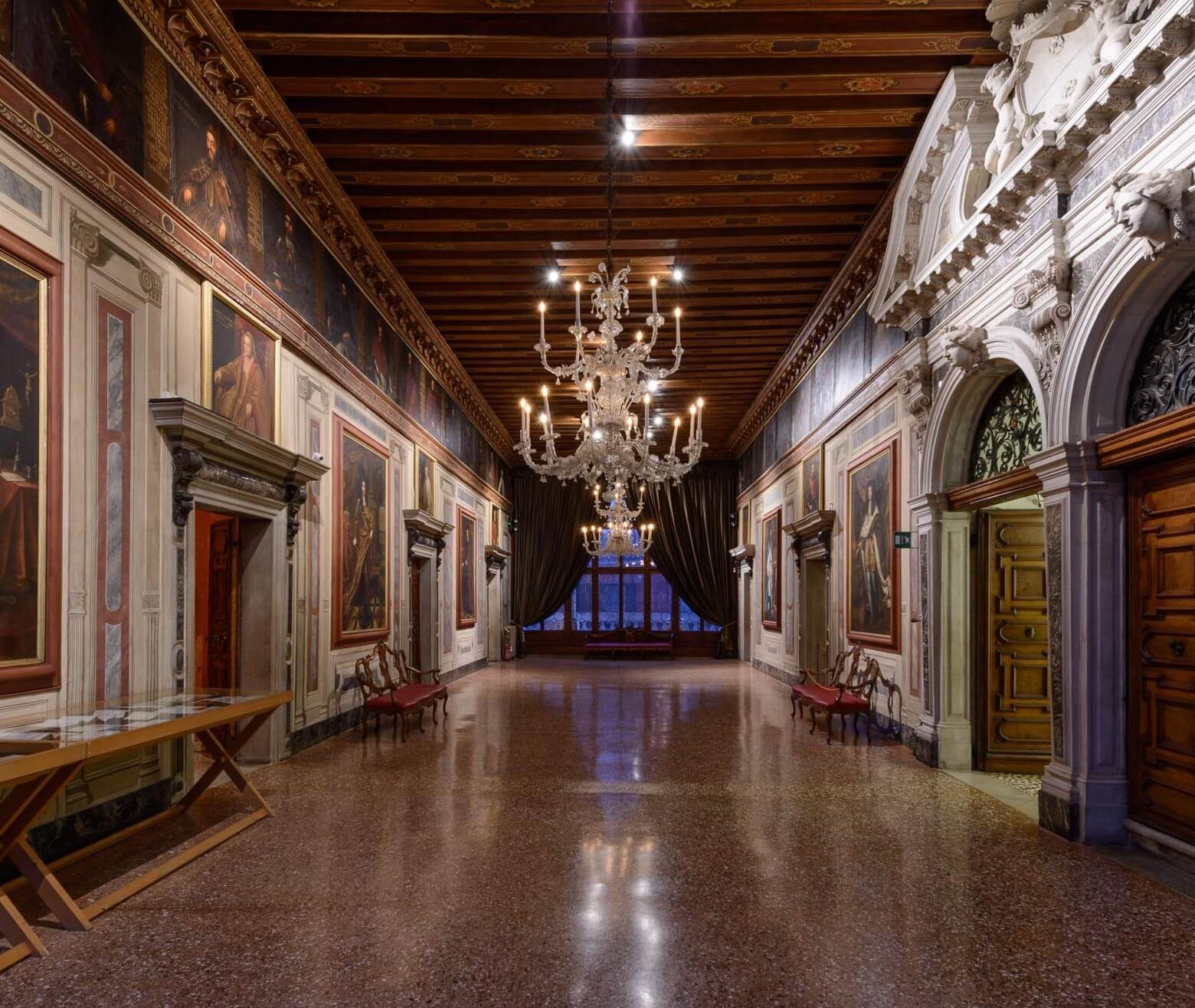
Until recently the Mocenigo family still lived in the palazzo and on the first piano nobile one can see Rococo or Neo-classic style frescoes and furnishing that mostly go back to the second half of the 18th century. Many of the rooms are decorated with paintings celebrating the family’s glories, the climax of which was when Alvise IV was doge, (1763-1778).
Of considerable interest are the ceiling frescoes, completed in 1787 for the marriage of Alvise IV’s nephew to Laura Corner, for that occasion are realized the frescoes by Jacopo Guarana (Verona, 1720 –Venezia, 1808), Giambattista Canal (Venezia, 1745 – 1825) e Giovanni Scajaro (around second half of 18th cent.). Of particular note are also the root wood doors and engraved, gilded cornices.
From the Mocenigo Family to the Foundation of the Civic Museum
The family’s last descendent, in 1945 Alvise Nicolò bequeathed the palazzo to the city on the condition it became an “Art Gallery to complete the Correr Museum“. But it was only when the widow Costanza Faà di Bruno (1877-1974) passed away that the building, the heritage it contained and the archive were formally handed over to the Fine Arts Department of the Venice City Council.
Opened to the public in 1985, it became the seat of the Study Centre for the History of Textiles and Costume (now the Study Centre for the History of Textiles, Costume and Perfume), housing the vast collections of ancient fabrics and clothes belonging to the Venice Civic Museums – most of which came from the Correr, Guggenheim, Cini and Grassi collections. Palazzo Mocenigo also contains a well-stocked library specialising in the history of fabrics, costumes, and fashion. The library is situated in the rooms on the first-floor piano nobile that have not conserved their original furnishings; the stocks of fabrics and costumes are situated on the first mezzanine and on the top-floor.
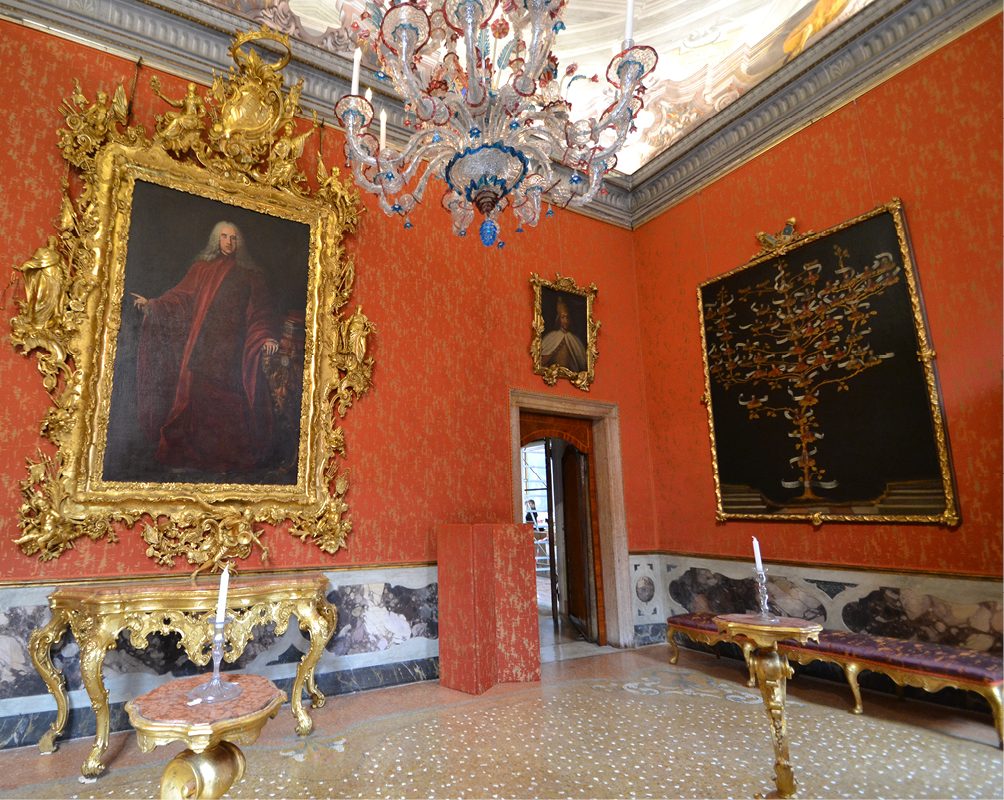
Completely renewed and expanded at the end of 2013, the itinerary winds its way through twenty rooms on the first piano nobile, therefore doubling theamount of exhibition area compared to when it opened in 1985. As a whole, the rooms skilfully evoke the different aspects of the life and activities of a Venetian nobleman between the 17th and 18th century, and on display are mannequins wearing valuable ancient garments and accessories that belong to the Study Centre connected to the Museum.
Paying particular attention to the history of the city, fashion and costumes have therefore always played a key role in the studies and exhibitions of the museums in the aristocratic setting of the Palazzo Mocenigo.
The Mocenigo family
The so-called San Stae branch of the Mocenigo family originated from the Mocenigo of San Samuele. Nicolò Mocenigo (1512-1588), brother of Doge Alvise (1507-1577), bequeathed the property of San Stae to his sons Marco Antonio and Tommaso in his will, with the consequent separation from the main branch, which in San Samuele lived in the two palazzi known as Casa Vecchia and Casa Nuova (the ‘Old House’ and the ‘New House’).
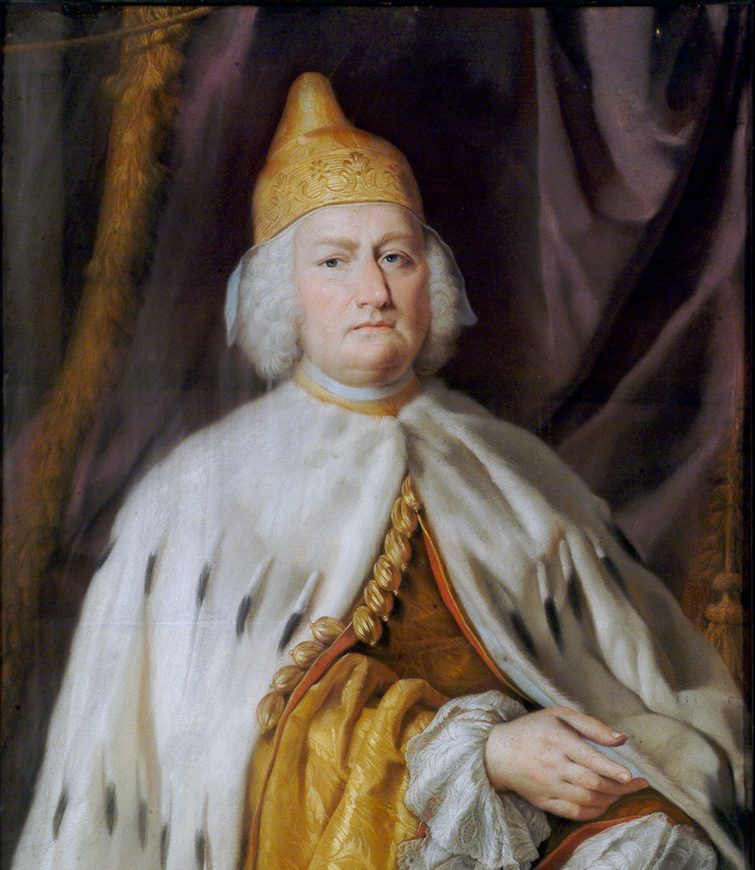
The Mocenigos were one of the most illustrious Venetian patrician families and gave the Venetian Republic no less than seven doges: Tommaso (1414 to 1423), Pietro (1474 to 1476) and Giovanni (1478 to 1485) were followed by Alvise I (1570 to 1577). Alvise I was doge at the time of the victory at Lepanto. Moreover, he introduced the right of primogeniture with a legacy of 20,000 ducats and the obligation to name all his descendant’s first-born sons Alvise, hence the numerous generations of Alvise in the family). The last two of the Mocenigo doges were Alvise II (from 1722 to 1732, to whom we owe the rebuilding of the façade of the church of San Stae), and Alvise IV (from 1763 to 1778).
Many of the Mocenigo di San Stae family members also held prestigious positions as ecclesiastics, procurators, ambassadors and captains (the most famous being Lazzaro Mocenigo (1624-1657), who, after several victories against the Turks, lost an eye in combat and died attempting to strike directly at Constantinople).