Conferenza
Friday, 16 May 2025, 6.00 pm
Venice, Palazzo Mocenigo Museum
Introduction by
Chiara Squarcina, Scientific Director, Fondazione Musei Civici di Venezia
Speakers
Anna Messinis, Researcher and author of the book “The History of Perfume in Venice”
Antonio Trampus, Full Professor at Ca’ Foscari University of Venice
Michela Nardi, Founder of Essenziarte and Independent Curator
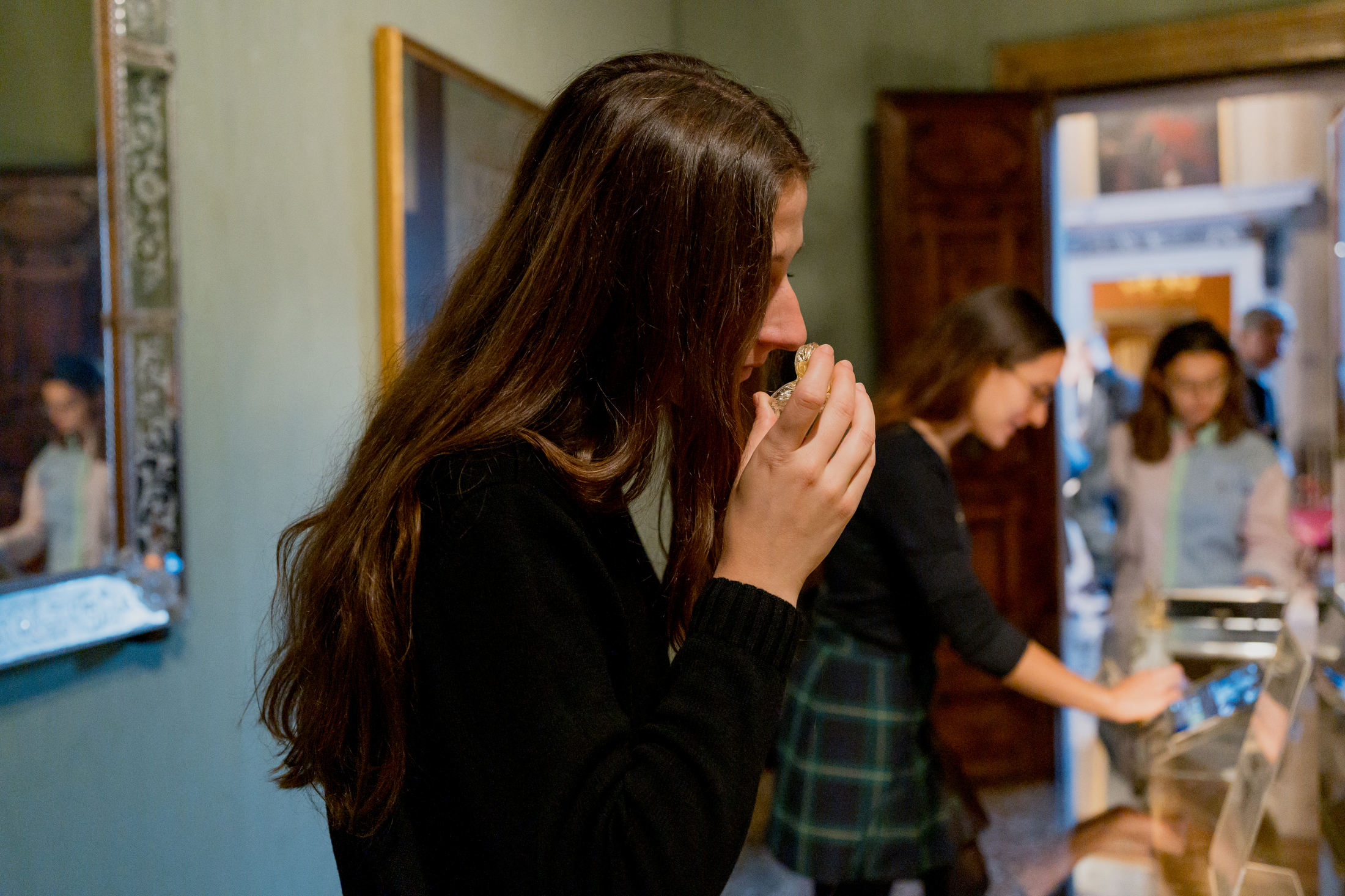
The conference, conceived by Essenziarte, focuses on the history of perfume in Venice, exploring the world of the senses through the fascinating figure of Casanova. The eighteenth century was an era in which pleasure and refinement became central to the daily life of the Venetian aristocracy and emerging bourgeoisie, with perfume playing a particularly important role.
Men’s and women’s fragrances were not merely adornments, but an extension of personal charm. Olfactory accords of musk, amber and spices evoked sensuality and mystery. In a society where personal hygiene was not yet as widespread as it is today, perfumes also served to mask odours, becoming a symbol of elegance and status. As they do today, perfumes evoked memories, emotions and desires, offering an intangible dimension to everyday life.
Within the context of eighteenth-century Venice, Casanova – whose birth anniversary is commemorated in 2025 – lived immersed in a world of pleasures, from refined food to intoxicating perfumes, from luxurious fabrics to human contact. In his Memoirs, the world of the senses is never separated from the art of seduction.
Casanova describes how details – from the perfume worn by his lovers to their clothing – were essential in creating a seductive atmosphere. His charm was not limited to words, but included an intense attention to sensory details. He is said to have been fond of the scent of rose, associated with femininity, as well as spicy fragrances that evoked the Orient.
From Venice to Paris, from London to Saint Petersburg, Casanova explored different cultures, foods and perfumes. Every place he visited enriched his repertoire of sensory experiences. In the European courts, for example, perfume was also a statement of power and refinement, and he always knew how to use it to his advantage.
–
Participation in the conference is by reservation only, subject to availability, by sending an email to: biblioteca.mocenigo@fmcvenezia.it